Pontremoli
|
Latest page update: 27 August 2025
|
By: Dion Protani
|
Where to Stay
Where to Stay in Pontremoli
Pontremoli offers a small but appealing selection of established hotels, supported by its medieval centre, riverside setting and position on the Via Francigena. The best-reviewed options focus on comfort, character and convenient access to the historic streets, bridges and surrounding Lunigiana countryside.
Hotel Napoleon, close to the centre, is one of the most established choices, appreciated for its comfortable rooms, welcoming service and practical location for exploring Pontremoli on foot (€€). Albergo Ristorante Piandrano, in the nearby hills, provides a peaceful alternative with traditional hospitality, local cuisine and easy access to the surrounding countryside (€€). For a more refined stay in the wider Lunigiana area, Villa Una near Mulazzo offers elegant interiors, a relaxed atmosphere and scenic views, making it a pleasant base for touring Pontremoli and the nearby hill villages (€€€).
Where is
Where is Pontremoli?
|
The historic town of Pontremoli is situated within the Massa & Carrara province in Tuscany. It's an official municipality which had a population of 6,883 on 1 January 2024. It stands at an elevation of 236 metres above sea level and covers 182 square kilometres.
Main sights in the town include the Stele Statue Museum, a 14th century bell tower and a Roman bridge across the River Magra. |
Comune di Pontremoli
|
Province: Massa and Carrara
Region: Tuscany Population: 6,883 (in 2024 - source) Total size: 182 km² Elevation: 236 metres Highlights: Museo delle Statue Stele, Piazza del Duomo Market days: Wednesdays and Saturdays from 08:00 to 13:00 Close by: Fosdinovo, Ponzanello, Carrara, Marina di Carrara |
What People Ask About Pontremoli
What is Pontremoli known for?
Pontremoli is known for its medieval bridges, stone houses, and the Castle of Piagnaro, which houses the Museum of the Stele Statues. It’s a key town in the Lunigiana region and sits on the historic Via Francigena pilgrimage route.
Is Pontremoli worth visiting?
Yes, Pontremoli is worth visiting for its historical charm, local festivals, and access to walking trails in the Apennines. It’s less touristy than other Tuscan towns and offers a glimpse into the culture of northern Tuscany’s Lunigiana area.
What are the Stele Statues in Pontremoli?
The Stele Statues are prehistoric stone figures carved by ancient peoples of the Lunigiana. They are displayed at the Museum of the Stele Statues in the Castle of Piagnaro and represent some of the oldest examples of sculpture in Italy.
How do you get to Pontremoli?
Pontremoli has its own train station with direct services to Parma, La Spezia, and other towns along the Parma–La Spezia line. It’s also accessible by car via the A15 motorway, with an exit just a few minutes from the town centre.
What food is Pontremoli famous for?
Pontremoli is known for testaroli, a traditional pasta-like dish made with a batter cooked on hot plates and often served with pesto. It’s a local speciality of the Lunigiana area, along with chestnut-based desserts and hearty mountain fare.
Related links
Discover
Discover Pontremoli
Centre of the Lunigiana region
Pontremoli is the northernmost town in Tuscany and the centre of the sub-region known as the Lunigiana. The town takes sits name from a trembling bridge across the River Magra that dissects it; put the Italian word for bridge (ponte), next to the verb "to tremble" (tremare) and you get Pontremoli.
The Lunigiana has been dubbed "The Land of a Hundred Castles" due to the proliferation of fortresses in the area. At one time there were said to be as many as 160 castles in the Lunigiana which occupied an important strategic location between the Apennines and the Ligurian Sea. Pilgrims and other visitors were expected to pay tribute when passing through these rocky, forested lands which were relatively simple to defend; even more so from the many castles within them.
Bustling market town
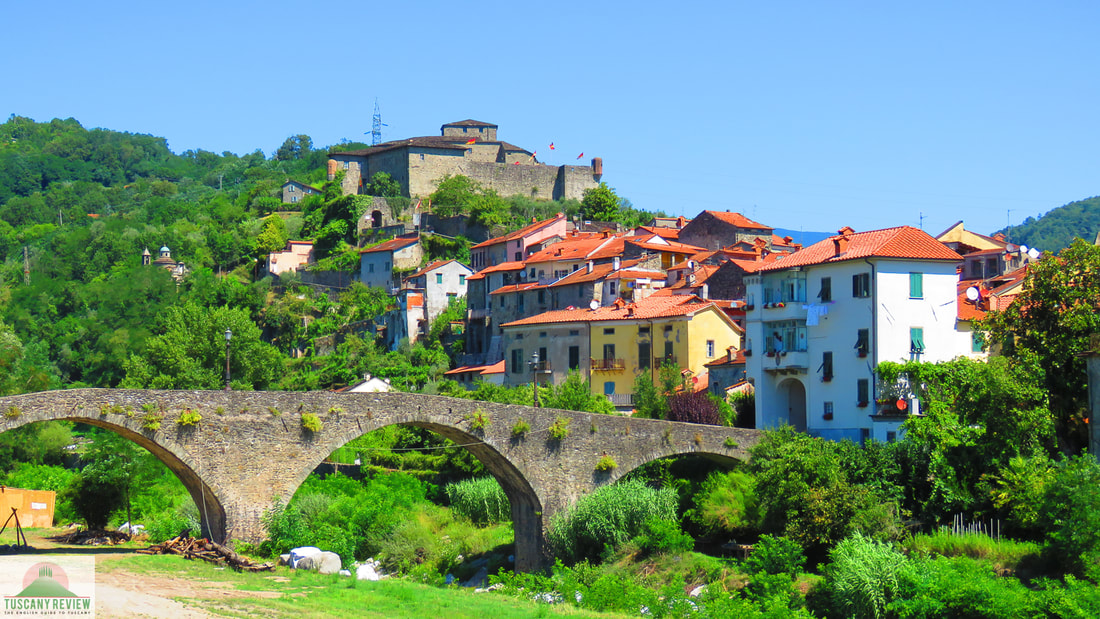
In modern times, this is a delightful market town whose centre is full of medieval charm. The River Magra flows on both sides of the centro storico which gradually gives way to a hilltop upon which sits the town's most famous attraction.
The Museo delle Statue Stele Lunigianesi exhibits a series of stele: pagan stone carvings that date back as far as 3,000 BC. The Museum is housed in the Castello del Piagnaro which looks down on to the town from its elevated perch.
Back down at ground level, the main focal point in the town is the Piazza del Duomo which becomes a bustling market square every Wednesday and Saturday morning. The main building on the Piazza is of course the Cathedral (Duomo) that it's named after. The 17th century Cathedral exhibits a beautiful Baroque facade, while Looming larger still is the 14th century bell tower known by two names.
The Museo delle Statue Stele Lunigianesi exhibits a series of stele: pagan stone carvings that date back as far as 3,000 BC. The Museum is housed in the Castello del Piagnaro which looks down on to the town from its elevated perch.
Back down at ground level, the main focal point in the town is the Piazza del Duomo which becomes a bustling market square every Wednesday and Saturday morning. The main building on the Piazza is of course the Cathedral (Duomo) that it's named after. The 17th century Cathedral exhibits a beautiful Baroque facade, while Looming larger still is the 14th century bell tower known by two names.
Torre del Cacciaguerra
The tower which in later years had a clock added to it, is sometimes referred to as the Campanone (Big Tower) or the Cacciaguerra. Using that second epithet: the Torre del Cacciaguerra was so named at a time when Guelph and Ghibelline factions were warring within the medieval town. It was erected in order to keep the two sides at bay and literally translates as "war-chaser", in the sense of driving war away.
A series of bridges across the River Magra embellish the aesthetic charm of Pontremoli with the most famous of those situated to the west of the centro storico. The Ponte Romano della Cresa is a beautiful stone-arch bridge which dates back to 1219 although modified many times over in the intervening years.
Things to Do
Things to Do in Pontremoli
- Castello del Piagnaro is a medieval fortress that overlooks the town from a hillside position, originally built to defend the Via Francigena. It now houses the Museo delle Statue Stele, which exhibits prehistoric stone statues from the Lunigiana region. The castle’s towers and battlements offer views over the rooftops and river valleys. Its structure reflects centuries of adaptations and restorations.
- Museo delle Statue Stele is located inside the Castello del Piagnaro and displays anthropomorphic sandstone figures dating from the Bronze and Iron Ages. These statues represent warriors and female figures with stylised features and weapons. The museum explains the cultural context of the Lunigiana’s ancient civilisations. It is a key site for understanding early human settlement in the Apennines.
- Duomo di Santa Maria Assunta is Pontremoli’s cathedral, built in the 17th century with a white marble façade and elaborate Baroque interior. The high altar, ceiling frescoes, and side chapels are notable features. It stands in the heart of the town’s main square, Piazza del Duomo. The adjoining bell tower rises above the historic centre.
- Ponte della Cresa is one of the oldest bridges in Pontremoli, with medieval origins and a stone arch design. It crosses the River Magra and connects different parts of the old town. The bridge is associated with historic pilgrim routes and has been repaired several times after floods. It remains a picturesque element in the town’s urban landscape.
- Via Cavour and Historic Centre form a long pedestrian axis lined with noble palaces, traditional shops, and porticoes. The street follows the course of the ancient Via Francigena, used for centuries by pilgrims travelling to Rome. Notable buildings include Palazzo Dosi Magnavacca and Palazzo Bocconi. The area reflects Pontremoli’s role as a cultural and commercial crossroads.
Tours and Activities
Pontremoli Tours and Activities
Where to Eat
Where to Eat in Pontremoli
- Osteria Della Luna: Known for its traditional Lunigiana cuisine, this osteria offers local dishes such as testaroli pasta and torta d'erbi (herb pie). The welcoming atmosphere and attentive service enhance the dining experience. Price guide: €€ (Mid-range)
- Trattoria Della Bietola: Located in a historic building with stone arched ceilings, this trattoria serves traditional dishes such as testaroli cacio e pepe and tagliatelle with white truffles. The rustic ambiance adds to its charm. Price guide: €€ (Mid-range)
- Trattoria Norina: Situated in a centuries-old building, this trattoria offers a menu that changes daily based on seasonal availability. Dishes like patona (chestnut flour bread with ricotta) and tordelli (spinach ravioli with meat ragù) are highlights. Price guide: €€ (Mid-range)
- Pizzeria San Giorgio: Located adjacent to the Romanesque chapel of San Giorgio, this pizzeria offers a variety of pizzas baked in a wood-fired oven, along with local specialties such as veal with porcini mushrooms. The summer garden provides a pleasant outdoor dining option. Price guide: €€ (Mid-range)
- Osteria da Bussé 1930 in Pontremoli: With over 90 years of history, this osteria celebrates Pontremoli's rich culinary heritage. The menu features local river trout, oxtail, wild boar, and homemade pasta flavoured with ricotta, sage, and parmesan. The elegant ambiance and knowledgeable staff ensure a memorable experience. Price guide: €€€ (Mid-range)
Photo Gallery
Pontremoli Photo Gallery
Places Close to [Place Name]
Places Close to Pontremoli
- Fivizzano (approx. 30 km west of Pontremoli): A charming town in the Lunigiana region, Fivizzano is known for its historical centre, including the Palazzo Fantoni and the Church of San Giovanni. The town is also a great base for exploring the surrounding mountains and hiking trails, offering visitors a glimpse into the area's medieval past and natural beauty.
- Aulla (approx. 25 km southwest of Pontremoli): Aulla is a town with a rich history, particularly known for its medieval fortress, the Castello Malaspina. The town offers access to the beautiful Magra River and the surrounding Apennine Mountains. Aulla is also a key point along the ancient Via Francigena pilgrimage route.
- Massa (approx. 50 km southwest of Pontremoli): Located near the coast, Massa is known for its marble quarries and the impressive Massa Castle. Visitors can explore the historic town centre, the Cathedral of St. Peter, and the nearby beaches of the Tyrrhenian Sea. The town is also surrounded by the beautiful Apuan Alps, ideal for hiking and nature exploration.
- Bagnone (approx. 20 km south of Pontremoli): A small town in the Lunigiana region, Bagnone features a medieval castle and beautiful narrow streets lined with traditional stone houses. The town offers scenic views of the surrounding mountains, as well as hiking trails and access to the nearby river for outdoor activities.
- Carrara (approx. 45 km southwest of Pontremoli): Famous for its marble quarries, Carrara is a town with a rich artistic heritage. Visitors can tour the quarries, explore the Carrara Cathedral, and admire sculptures by famous artists who worked with Carrara marble. The town also offers views of the surrounding Apuan Alps and the Ligurian Sea.
Tuscany Top 10 - My Recommended Destinations in Tuscany
1. Florence
2. Siena
3. Val d'Orcia
4. Pisa
5. Lucca
6. San Gimignano
7. Giglio
8. Volterra
9. Pienza
10. Elba
👉 Explore the Top 10 Places to Visit in Tuscany
1. Florence
2. Siena
3. Val d'Orcia
4. Pisa
5. Lucca
6. San Gimignano
7. Giglio
8. Volterra
9. Pienza
10. Elba
👉 Explore the Top 10 Places to Visit in Tuscany
How to Get to [Place Name]
How to Get to Pontremoli
By Rail: Pontremoli is served by its own train station, Stazione di Pontremoli, located on the Parma-La Spezia line. Trains from Parma to Pontremoli take approximately 1 hour and 30 minutes, while those from La Spezia take about 1 hour. From the station, the town's attractions are within walking distance.
By Road: Pontremoli is approximately 90 km northeast of La Spezia, with a driving time of around 1 hour and 30 minutes via the A15 motorway. From La Spezia, follow signs for Parma, then take the exit for Pontremoli. The town is also accessible via the SS62 road, connecting it to surrounding areas.
Nearest International Airports:
By Road: Pontremoli is approximately 90 km northeast of La Spezia, with a driving time of around 1 hour and 30 minutes via the A15 motorway. From La Spezia, follow signs for Parma, then take the exit for Pontremoli. The town is also accessible via the SS62 road, connecting it to surrounding areas.
Nearest International Airports:
- Pisa International Airport (Aeroporto di Pisa): Located about 110 km southwest of Pontremoli, the drive takes approximately 1 hour and 30 minutes via the A12 and A15 motorways. From Pisa, you can rent a car or take a train to La Spezia, then transfer to a local train to Pontremoli.
- Genoa Cristoforo Colombo Airport (Aeroporto di Genova): Situated about 120 km east of Pontremoli, the drive takes around 1 hour and 30 minutes via the A12 motorway. From Genoa, you can rent a car or take a train to La Spezia, then transfer to a local train to Pontremoli.
Private Transfers
Pontremoli Private Transfers
A private transfer to or from Pontremoli is a convenient way to reach this northern Tuscan town, especially for those arriving at airports or stations without direct local connections. You’ll be collected from your specified location and taken directly to your destination, without needing to change trains or arrange local taxis.
Pontremoli is located in northern Tuscany, within the province of Massa-Carrara, close to the border with Emilia-Romagna and Liguria. The town is served by its own train station on the Parma–La Spezia line. The nearest international airport is Parma Airport, approximately 85 kilometres away (1 hour and 15 minutes by car). Pisa International Airport lies about 110 kilometres south, with a travel time of around 1 hour and 30 minutes.
If you’d like to arrange a transfer, please fill out the form below with your journey details.
Pontremoli is located in northern Tuscany, within the province of Massa-Carrara, close to the border with Emilia-Romagna and Liguria. The town is served by its own train station on the Parma–La Spezia line. The nearest international airport is Parma Airport, approximately 85 kilometres away (1 hour and 15 minutes by car). Pisa International Airport lies about 110 kilometres south, with a travel time of around 1 hour and 30 minutes.
If you’d like to arrange a transfer, please fill out the form below with your journey details.