Grottammare
|
Latest page update: 28 August 2025
|
By: Dion Protani
|
Where to Stay
Where to Stay in Grottammare
Grottammare offers a well-reviewed selection of established hotels, supported by its sandy beaches, seafront promenade and proximity to the elevated Borgo Antico. The best options focus on comfort, sea access and convenient proximity to both the waterfront and the historic centre.
Hotel Roma, close to the beach, is one of the most established choices, appreciated for its welcoming atmosphere, comfortable rooms and practical position near the promenade (€€). Hotel Parco dei Principi, on the seafront, provides a more resort-style alternative with pools, gardens and direct beach access, making it popular with guests on longer seaside stays (€€€). For those wanting a refined base nearby, Valentino Resort offers modern suites, a wellness area and panoramic views, combining comfort with easy access to both the promenade and the Borgo Antico (€€€€).
Where is
Where is Grottammare?
|
The town of Grottammare is situated within the Province of Ascoli Piceno in Marche and had a population of 15,960 on 1 January 2022. It stands at an elevation of 126 metres above sea level and covers a geographical area of 18 square kilometres.
This is something of a two-in-one town with a pretty hillside village overlooking a smart beach resort. |
Comune di Grottammare
|
Province: Ascoli Piceno
Region: Marche Population: 15,890 (in 2024 - source) Size: 18 km² Elevation: 126 metres Highlights: Grottammare Alta, Piazza Peretti, lower town beach Water quality: Blue Flag Beach 2024 - 2025 Close by: San Benedetto del Tronto, Ripatransone, Moresco |
One of I Borghi più belli d'Italia (Italy's Most Beautiful Villages)
Listing headline: La Perla dell'Adriatico (The Pearl of the Adriatic)
What People Ask About Grottammare
What is Grottammare known for?
Grottammare is known for its sandy beaches, palm-lined seafront promenade, and historic old town on the hill. It forms part of the Riviera delle Palme and is recognised as one of the most attractive seaside towns in the Marche region.
Is Grottammare worth visiting?
Yes, Grottammare is worth visiting for its combination of beach facilities, art nouveau architecture, and panoramic views from the medieval village. It’s a popular destination for summer holidays with both Italian and international visitors.
What can you do in Grottammare?
In Grottammare you can enjoy the beach, walk or cycle along the promenade, and explore the historical centre with its old churches, piazzas, and viewpoints. The town also hosts summer events, markets, and cultural festivals.
Does Grottammare have a historic centre?
Yes, the old town of Grottammare is set on a hillside overlooking the sea and includes medieval walls, narrow lanes, and the Church of San Giovanni Battista. It offers excellent views over the Adriatic and contrasts with the modern lower town by the beach.
How do you get to Grottammare?
Grottammare has its own train station with regional services along the Adriatic coast, including direct connections to Ancona and Pescara. It's also accessible by car via the A14 motorway, with parking near the beach and in the lower town.
Related links
Discover
Discover Grottammare
The Two Sides of Grottammare
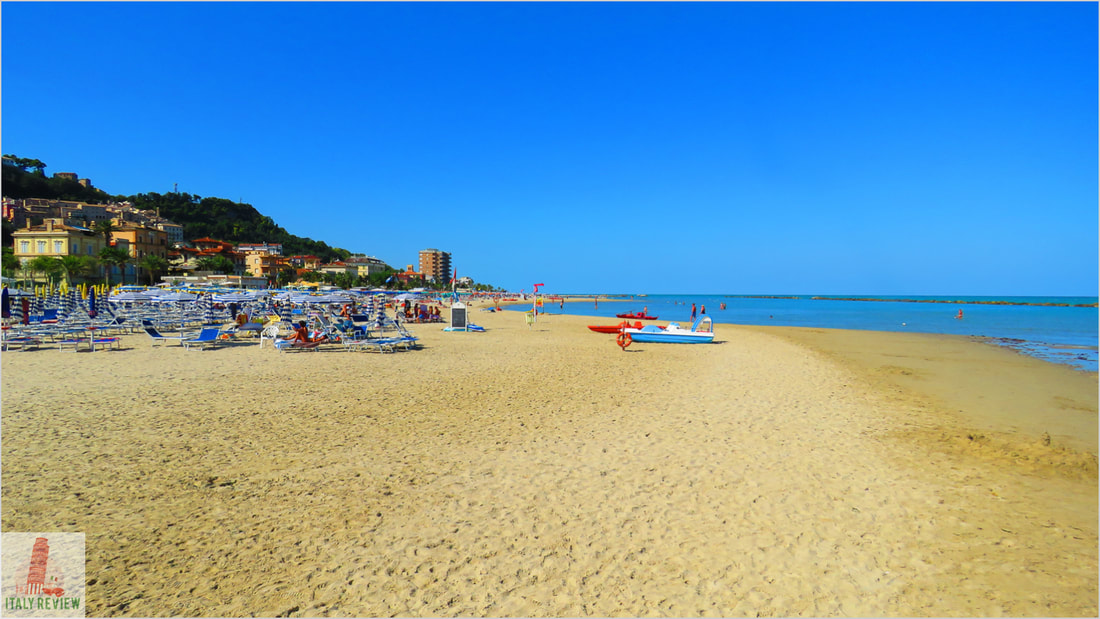
Facing out on to the azure waters of the Marche region's Adriatic Coast, Grottammare offers two different types of day out: you can either explore the medieval streets around the hill town of Grottammare Alta (Upper Grottammare) or plonk yourself on the sandy beach for a little R&R. The flat, expansive beach is made up of a series of private establishments where you can hire a sun bed and umbrella, interspersed with a smaller number of free areas.
Grottammare Bassa - The Beach Area
The buildings in the lower area of the town behind the beach are fairly modern and conceal a large number of shops, bars and restaurants around wide, tree-lined streets and piazzas. The prettiest building in the area is the Chiesa di San Pio V which boasts an impressive bell tower; just about the tallest edifice in the town. From the church to the beach is a walk of a few hundred metres, interrupted briefly by a small bridge underneath the train tracks that run north to south along the coast.
Facing out on to the azure waters of the Marche region's Adriatic Coast, Grottammare offers two different types of day out: you can either explore the medieval streets around the hill town of Grottammare Alta (Upper Grottammare) or plonk yourself on the sandy beach for a little R&R. The flat, expansive beach is made up of a series of private establishments where you can hire a sun bed and umbrella, interspersed with a smaller number of free areas.
Grottammare Bassa - The Beach Area
The buildings in the lower area of the town behind the beach are fairly modern and conceal a large number of shops, bars and restaurants around wide, tree-lined streets and piazzas. The prettiest building in the area is the Chiesa di San Pio V which boasts an impressive bell tower; just about the tallest edifice in the town. From the church to the beach is a walk of a few hundred metres, interrupted briefly by a small bridge underneath the train tracks that run north to south along the coast.
Grottammare Alta
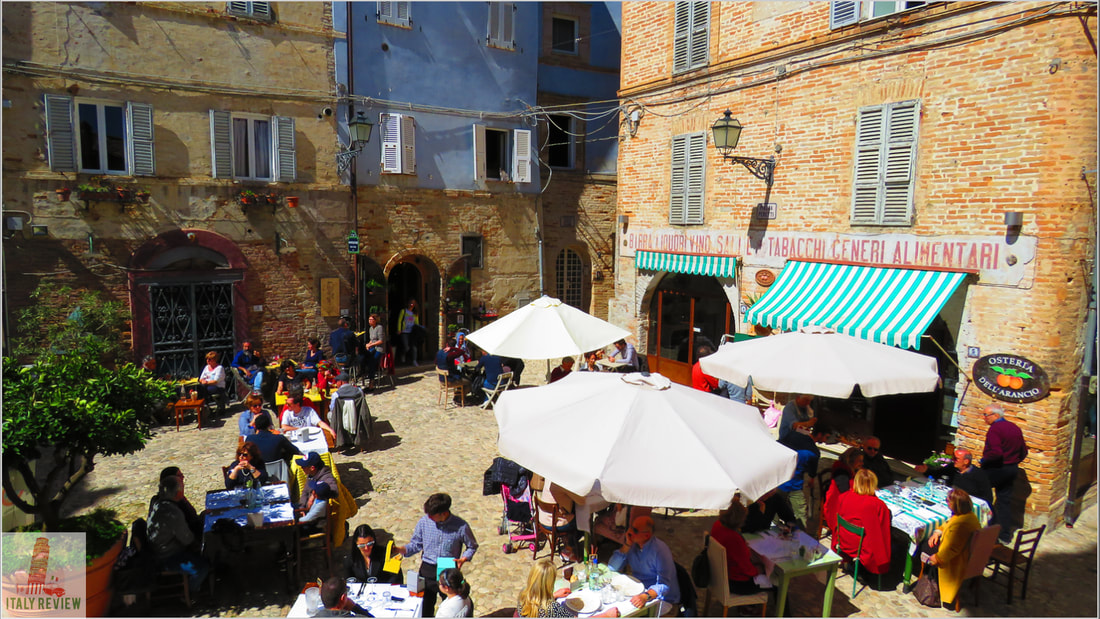
Using the church as a reference point for a second time, it's possible to make your way up to Grottammare Alta on foot; it's a fairly strenuous climb of 800 metres which takes about 15 minutes. If it's hot and you have a car then it's ok to be lazy and drive up the hill to the car park next to the upper town. As you enter the old town you get some great views down onto the coast before making your way through the narrow streets to Piazza Peretti. This tiny square is perhaps the prettiest part of the town; bursting with character it's always bustling around meal times when you can dine al-fresco.
Some of the houses in the streets around the upper town are painted in bright colours, giving it a cheerful appearance, and as you turn right along one of the lanes beyond the Piazza you find yourself next to a little watchtower called the Torrione Battaglia. The little balcony area here provides some more stunning panoramas of the coastline as well as a restaurant from where you can enjoy the view at leisure. You can then climb a little higher than the upper town to reach what remains of the town's castle: the Castello di Grottammare.
Owing largely to its upper town rather than the beach area, Grottammare is included in the list of Borghi Più Belli d'Italia (Italy's most beautiful villages). For each village in the collection there's a tagline and Grottammare's is La Perla dell'Adriatico, (The Pearl of the Adriatic).
Using the church as a reference point for a second time, it's possible to make your way up to Grottammare Alta on foot; it's a fairly strenuous climb of 800 metres which takes about 15 minutes. If it's hot and you have a car then it's ok to be lazy and drive up the hill to the car park next to the upper town. As you enter the old town you get some great views down onto the coast before making your way through the narrow streets to Piazza Peretti. This tiny square is perhaps the prettiest part of the town; bursting with character it's always bustling around meal times when you can dine al-fresco.
Some of the houses in the streets around the upper town are painted in bright colours, giving it a cheerful appearance, and as you turn right along one of the lanes beyond the Piazza you find yourself next to a little watchtower called the Torrione Battaglia. The little balcony area here provides some more stunning panoramas of the coastline as well as a restaurant from where you can enjoy the view at leisure. You can then climb a little higher than the upper town to reach what remains of the town's castle: the Castello di Grottammare.
Owing largely to its upper town rather than the beach area, Grottammare is included in the list of Borghi Più Belli d'Italia (Italy's most beautiful villages). For each village in the collection there's a tagline and Grottammare's is La Perla dell'Adriatico, (The Pearl of the Adriatic).
Things to Do
Things to Do in Grottammare
- Vecchio Incasato is the historic upper town, perched on a hill with medieval walls, cobbled streets and terracotta-roofed houses. It includes Renaissance-era palazzi, arches, and a network of narrow lanes. The viewpoint from Piazza Peretti offers panoramic sea and coastal views. This area is quieter than the seafront and ideal for exploring on foot.
- Chiesa di Santa Lucia is a Baroque church commissioned in the 17th century by Pope Sixtus V, who was born in the area. It has a richly decorated interior with stucco work and a painted ceiling. The church stands prominently within the old town and features a scenic terrace outside. It often hosts concerts and cultural events.
- Teatro dell’Arancio is a small 19th-century theatre with an elegant façade and a central location in the upper town. Named after the citrus trees that once grew nearby, it has a horseshoe-shaped interior and classical decorations. The theatre is used for exhibitions, music, and theatre festivals. It sits near a panoramic viewpoint over the Adriatic.
- Lungomare di Grottammare is a palm-lined promenade stretching along the beach, popular for walking, cycling, and outdoor cafés. It features Art Nouveau villas and well-maintained gardens. The seafront is dotted with sculptures and fountains. The beach itself is sandy and gently sloping, ideal for swimming in summer.
- Museo Sistino di Arte Sacra is located inside the old Church of San Giovanni Battista and contains a small but valuable collection of sacred art. Highlights include wooden statues, illuminated manuscripts, and vestments from local churches. The museum also explains the history of religious life in the region. Guided visits are occasionally available during the summer.
Grottammare Tours and Activities
Where to Eat
Where to Eat in Grottammare
- Ristorante Il Grillo: Located near the seafront in Grottammare, this restaurant offers a variety of fresh seafood dishes, including grilled fish and seafood pasta. The intimate setting with ocean views makes it an excellent choice for a relaxing meal. Price guide: €€ (Mid-range)
- Trattoria La Perla: Situated in the heart of Grottammare, Trattoria La Perla is known for its traditional Italian cuisine, featuring regional dishes like lasagna and homemade pasta with meat sauce. The rustic interior and friendly service enhance the dining experience. Price guide: €€ (Mid-range)
- Ristorante Il Pescatore: A short walk from the beach, Il Pescatore serves fresh seafood and classic Italian dishes. The menu includes local specialties such as brodetto (fish stew) and seafood risotto. The outdoor seating provides a great spot to enjoy a meal by the coast. Price guide: €€ (Mid-range)
- Osteria dei Sognatori in Cupra Marittima: Located around 5 km from Grottammare, this charming osteria offers a selection of traditional Marche dishes, including roasted meats and seasonal vegetables. The cosy atmosphere and excellent wine list make it a perfect place for a casual yet refined meal. Price guide: €€ (Mid-range)
- Ristorante La Buca in Cupra Marittima: About 5 km from Grottammare, this restaurant offers a wide range of Italian and regional dishes, including pizza and seafood pasta. The welcoming atmosphere and outdoor terrace make it a great spot for enjoying a meal with family or friends. Price guide: €€ (Mid-range)
Photo Gallery
Grottammare Photo Gallery
Places Close to [Place Name]
Places Close to Grottammare
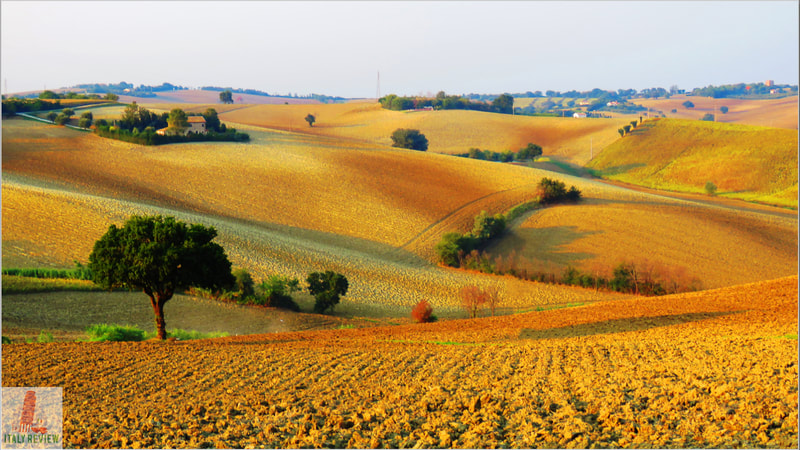
In terms of seaside resorts, Grottammare is just another in a long line of alternatives in either direction with the largest of them being San Benedetto del Tronto. It's Grottammare's hill town that sets it apart from the others however and if you have a car you can find some further hill towns inland. The trio of Ripatransone, Offida and Acquaviva Picena are all beautiful examples but it's not only the towns themselves that tease the eye: the dramatic landscapes around them of rolling hills punctuated with vineyards are quite breathtaking.
Grottammare couldn't be easier to reach by car: it lies on the E55/A14 Autostrada Adriatica which connects the city of Bologna in Emilia Romagna to Taranto in Puglia, mostly hugging the Adriatic Coast. The main provincial town of Ascoli-Piceno is also easy to reach from Grottammare and is itself one of the most beautiful Italian cities with some outstanding architecture around its famous piazzas.
By train you can head south from Grottammare to the port town of Pescara in the Abruzzo region, the hour long journey stopping along the way at a dozen or so seaside towns including the aforementioned San Benedetto. You can use the same train line to head north to Marche's capital city of Ancona, itself an important ferry port from which you can cross to Croatia. Just as with the southbound train to Pescara, the northbound train to Ancona stops at a dozen or so seaside towns including Civitanova Marche and takes just over an hour from Grottammare.
Grottammare couldn't be easier to reach by car: it lies on the E55/A14 Autostrada Adriatica which connects the city of Bologna in Emilia Romagna to Taranto in Puglia, mostly hugging the Adriatic Coast. The main provincial town of Ascoli-Piceno is also easy to reach from Grottammare and is itself one of the most beautiful Italian cities with some outstanding architecture around its famous piazzas.
By train you can head south from Grottammare to the port town of Pescara in the Abruzzo region, the hour long journey stopping along the way at a dozen or so seaside towns including the aforementioned San Benedetto. You can use the same train line to head north to Marche's capital city of Ancona, itself an important ferry port from which you can cross to Croatia. Just as with the southbound train to Pescara, the northbound train to Ancona stops at a dozen or so seaside towns including Civitanova Marche and takes just over an hour from Grottammare.
Marche Top 10 - My Recommended Destinations in Marche
1. Urbino
2. Conero Peninsula
3. Ascoli Piceno
4. Fano
5. Gradara
6. Frasassi Caves
7. Senigallia
8. Corinaldo
9. San Benedetto del Tronto
10. Ripatransone
👉 Explore the Top 10 Places to Visit in Marche
1. Urbino
2. Conero Peninsula
3. Ascoli Piceno
4. Fano
5. Gradara
6. Frasassi Caves
7. Senigallia
8. Corinaldo
9. San Benedetto del Tronto
10. Ripatransone
👉 Explore the Top 10 Places to Visit in Marche
How to Get to [Place Name]
How to Get to Grottammare
By Rail: Grottammare is served by its own train station on the Adriatic railway line. The station is located near the town centre, making it convenient for visitors to access the town by train.
By Road: Grottammare is approximately 90 km south of Ancona, with a driving time of around 1 hour and 30 minutes via the A14 motorway. From Ancona, take the A14 southbound, exit at Grottammare, and follow signs to the town centre.
Nearest International Airports:
By Road: Grottammare is approximately 90 km south of Ancona, with a driving time of around 1 hour and 30 minutes via the A14 motorway. From Ancona, take the A14 southbound, exit at Grottammare, and follow signs to the town centre.
Nearest International Airports:
- Ancona Falconara Airport (Aeroporto di Ancona-Falconara): Located about 80 km north of Grottammare, the drive takes around 1 hour via the A14 motorway. From the airport, you can rent a car or take a train to Grottammare.
- Pescara Abruzzo Airport (Aeroporto di Pescara-Abruzzo): Situated about 120 km south of Grottammare, the drive takes around 1 hour and 30 minutes via the A14 motorway. From the airport, you can rent a car or take a train to Grottammare.
Private Transfers
Grottammare Private Transfers
Booking a private transfer to or from Grottammare provides a convenient and comfortable way to travel along the Adriatic coast. Whether you're arriving at a nearby station or airport, a private transfer ensures direct door-to-door service without the need to navigate public transport connections.
Grottammare is located in the Marche region, within the province of Ascoli Piceno, directly on the Adriatic Sea. The town is served by its own railway station on the Ancona–Pescara line, offering regional connections with other coastal cities. For long-distance travel, San Benedetto del Tronto Station (just 5 kilometres south) offers more frequent services and is a common arrival point. The closest airports are Ancona Falconara Airport (around 90 kilometres north, 1 hour 15 minutes by car) and Pescara Airport (approximately 85 kilometres south, about 1 hour 10 minutes).
To arrange a private transfer to or from Grottammare, please complete the form below with your journey details.
Grottammare is located in the Marche region, within the province of Ascoli Piceno, directly on the Adriatic Sea. The town is served by its own railway station on the Ancona–Pescara line, offering regional connections with other coastal cities. For long-distance travel, San Benedetto del Tronto Station (just 5 kilometres south) offers more frequent services and is a common arrival point. The closest airports are Ancona Falconara Airport (around 90 kilometres north, 1 hour 15 minutes by car) and Pescara Airport (approximately 85 kilometres south, about 1 hour 10 minutes).
To arrange a private transfer to or from Grottammare, please complete the form below with your journey details.