Friuli -Venezia Giulia
|
Latest page update: 25 June 2025
|
By: Dion Protani
|
Where to Stay
Where to Stay in Friuli-Venezia Giulia
Friuli-Venezia Giulia offers a varied hotel scene that reflects its mix of Mitteleuropean heritage, Adriatic coastline and Alpine landscapes. In Trieste, Savoia Excelsior Palace stands out for its grand seafront position and refined historic interiors, offering views across the Gulf of Trieste and a setting close to the city’s cafés and monumental squares. Also in the city, Grand Hotel Duchi d’Aosta delivers a more intimate atmosphere on Piazza Unità d’Italia, blending traditional elegance with a long-standing reputation for service. In Udine, Astoria Hotel Italia provides a well-regarded central option, appreciated for its classic décor, quiet rooms and immediate access to the historic heart of the city.
On the coast, Hotel Riviera & Maximilian’s near Trieste is known for its clifftop position above the Miramare area, offering panoramic sea views, terraces and direct access to the water. Further west, Hotel Là di Moret in Udine combines a long family tradition with a spa, pool and restaurant noted for regional dishes. In Grado, Laguna Palace Hotel offers a contemporary beachfront stay with spacious rooms, wellness facilities and easy access to the lagoon and historic centre.
In Gorizia, Grand Hotel Entourage occupies a former palace at the foot of the castle, featuring period-style interiors that reflect the town’s layered history and cross-border character. Heading north into Alpine territory, Romantik Hotel Posta in Tarvisio delivers a mountain setting ideal for both winter and summer activities, with traditional wood interiors and easy access to the surrounding valleys.
Closer to the western edge of the region, Hotel Patriarca in San Vito al Tagliamento is a consistently rated option housed in a historic building, offering comfortable rooms and a convenient location for exploring the Friulian plain. Completing the selection, Hotel Suite Inn in Udine provides a modern boutique alternative with a friendly atmosphere, appealing to travellers seeking contemporary comfort within reach of the city’s historic attractions.
On the coast, Hotel Riviera & Maximilian’s near Trieste is known for its clifftop position above the Miramare area, offering panoramic sea views, terraces and direct access to the water. Further west, Hotel Là di Moret in Udine combines a long family tradition with a spa, pool and restaurant noted for regional dishes. In Grado, Laguna Palace Hotel offers a contemporary beachfront stay with spacious rooms, wellness facilities and easy access to the lagoon and historic centre.
In Gorizia, Grand Hotel Entourage occupies a former palace at the foot of the castle, featuring period-style interiors that reflect the town’s layered history and cross-border character. Heading north into Alpine territory, Romantik Hotel Posta in Tarvisio delivers a mountain setting ideal for both winter and summer activities, with traditional wood interiors and easy access to the surrounding valleys.
Closer to the western edge of the region, Hotel Patriarca in San Vito al Tagliamento is a consistently rated option housed in a historic building, offering comfortable rooms and a convenient location for exploring the Friulian plain. Completing the selection, Hotel Suite Inn in Udine provides a modern boutique alternative with a friendly atmosphere, appealing to travellers seeking contemporary comfort within reach of the city’s historic attractions.
Where is
Where is Friuli-Venezia Giulia?
|
It's difficult to say which has affected the region of Friuli-Venezia Giulia most: its rocky limestone plateau called the Carso which occupies a third of its territory, or the rocky political landscape through which its borders have gradually evolved.
Of Italy's twenty regions, five have "semi-autonomous" status and Friuli Venezia Giulia is one of them. The slightly-confusing name (Venice/Venezia is not part of the region), requires some explanation, as does the unusual fact that the region is no longer made up of provinces as most of the other Italian regions are. |
Friuli-Venezia Giulia relates in part to the area known as Friuli, which covers most of the region, excluding the capital Trieste and its surrounding area. Venezia Giulia is an historical term which comes from "Julian March" relating to an area including parts of Croatia and Slovenia, with which Friuli Venezia Giulia shares a border.
The Slovenian border lies to the east of the region while to the north is the international border with Austria and to the west, the regional Italian border with Veneto, of which Venice is capital.
Political turmoil and ever-changing borders
Confused? Well, it's more than understandable and an added layer of confusion comes from the former provinces of Friuli Venezia Giulia, of which there were four: namely Trieste, Gorizia, Udine and Pordenone. Between 2017 and 2018, those four provinces were divided up into eighteen administrative areas known as UTIs, (Unioni Territoriali Intercomunali), such as UTI Giuliana, of which Trieste is the capital.
The region was officially established in 1954 after a period, or better to say, a history of turmoil. The geographical position in an area where several languages are spoken is partly to blame for making it an important theatre of operations in a number of wars. The population of Friuli Venezia Giulia are native speakers either of Friuliano, Italian, Slovenian or German.
Regione Autonoma Friuli-Venezia Giulia
What People Ask About Friuli-Venezia Giulia
Is Friuli-Venezia Giulia worth visiting?
Yes—Friuli-Venezia Giulia is worth visiting for its diverse mix of mountains, coastline, and Central European influences. It’s a lesser-known region offering historic cities, excellent wines, and unique culture shaped by Italian, Slavic, and Austrian heritage.
What are the main attractions in Friuli-Venezia Giulia?
Key attractions include the city of Trieste, Miramare Castle, the Roman ruins in Aquileia, and the beaches of Grado and Lignano Sabbiadoro. The region also features alpine areas like the Carnic and Julian Alps, and wine routes near Cividale del Friuli.
How do I get to Friuli-Venezia Giulia?
The region is accessible by train from Venice, Milan, and Austria, with major stations in Trieste and Udine. Trieste Airport offers domestic and some international connections, and the A4 and A23 motorways provide road access from Italy and Slovenia.
What is Friuli-Venezia Giulia known for?
It’s known for its cultural diversity, Austro-Hungarian architecture, and white wines. The region has strong traditions in gastronomy, historic cities, and outdoor activities in the mountains and along the Adriatic coast.
When is the best time to visit Friuli-Venezia Giulia?
Spring and autumn are ideal for sightseeing and wine tasting, with mild weather and fewer tourists. Summer is popular along the coast, while winter attracts visitors to alpine ski areas and festive markets in the mountain towns.
Related links
Discover
Discover Friuli-Venezia Giulia
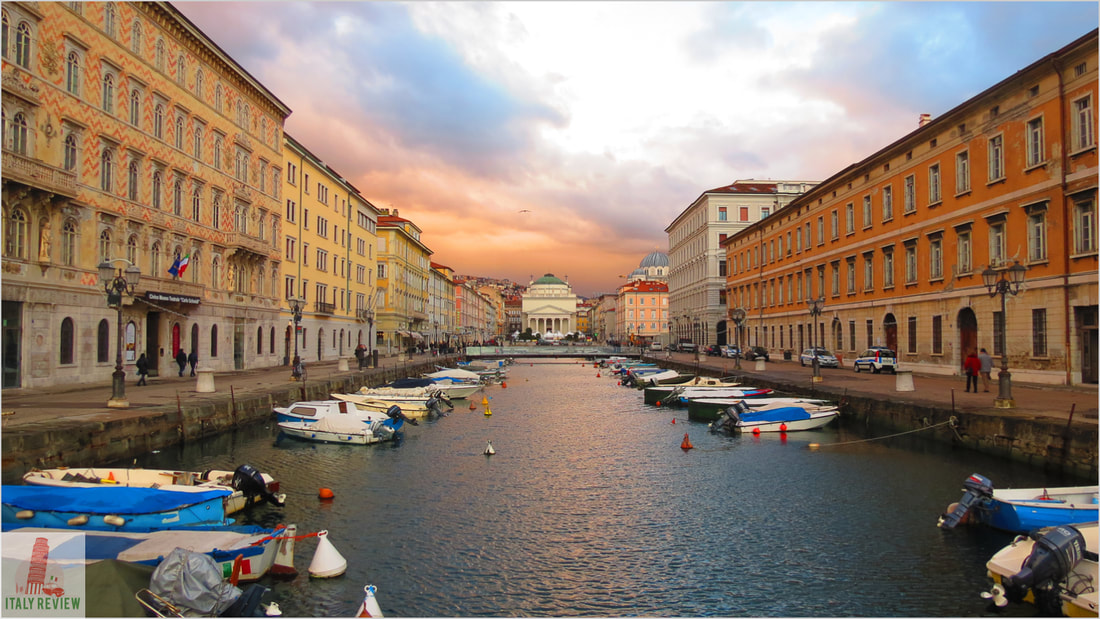
Trieste: the capital of Friuli-Venezia Giulia
Trieste, the capital of Friuli-Venezia Giulia acts as something of a microcosm of the region's political upheaval. As recently as 1918 it was in the hands of the Austrian Empire before its dissolution, annexed by the Germans in 1943, and shared between Italy and Yugoslavia later in the 20th century. For the Austrians it was of huge strategic importance as it was their only port and outlet on to the seas.
Trieste's port has also been instrumental in its development as an important centre of the coffee trade, accounting for in the region of 40% of Italy's imports of the substance. In a country of caffeine-addicts, that represents a lot of coffee!
Adriatic seaside resorts
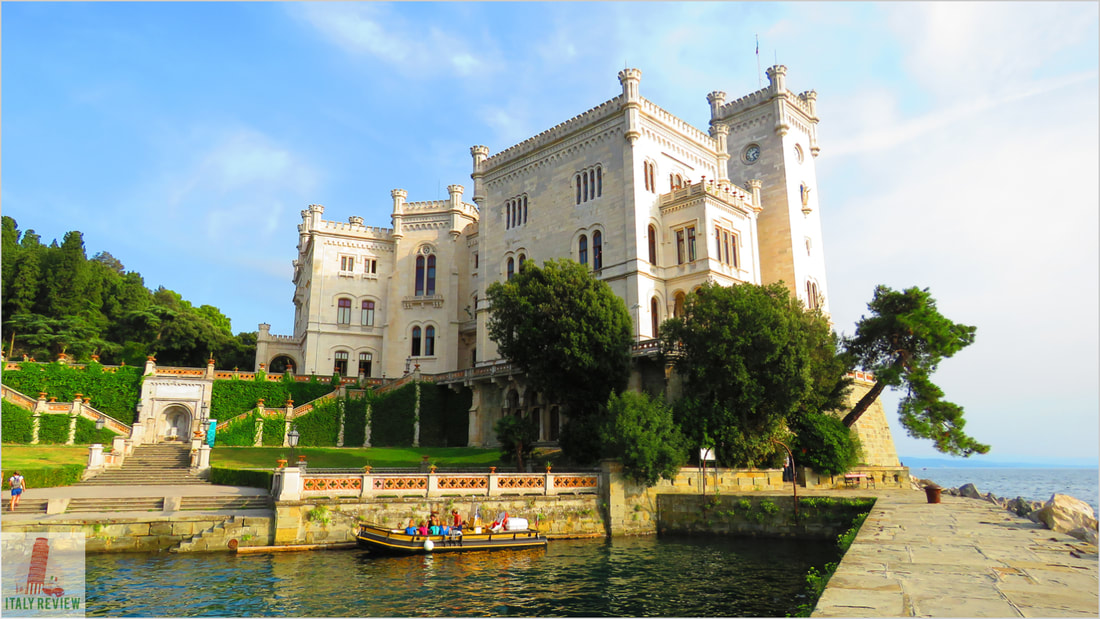
The capital sits at the easternmost point of Italy and geographically appears to be more a part of Slovenia than Italy. It lies on the Gulf of Trieste, north-west of which are a number of seaside resorts including Sistiana and Duino, while further south and even closer to Slovenia lies the delightful town of Muggia. Not to be missed on the periphery of Trieste is the beautiful Castello di Miramare.
Further west and away from the Gulf of Trieste lies one of the region's favourite seaside locations, the town of Grado. Apart from its historic architecture and beach, Grado is the main town of a small lagoon whose islands can be explored by boat. Continuing west from Grado you eventually reach another lagoon town: Marano Lagunare before arriving at the beach resort of Lignano Sabbiadoro .
UNESCO World Heritage Sites: Aquileia, Palmanova and Cividale del Friuli
The most important city in the south-west of Friuli-Venezia Giulia is Pordenone which is also the capital of one of the newly-formed UTI areas (UTI del Noncello). The unquestionable highlight of this area is the town of Aquileia, the one-time Roman capital of Friuli and now a UNESCO World Heritage Site comprising an ancient archaeological site and a beautifully-preserved Basilica.
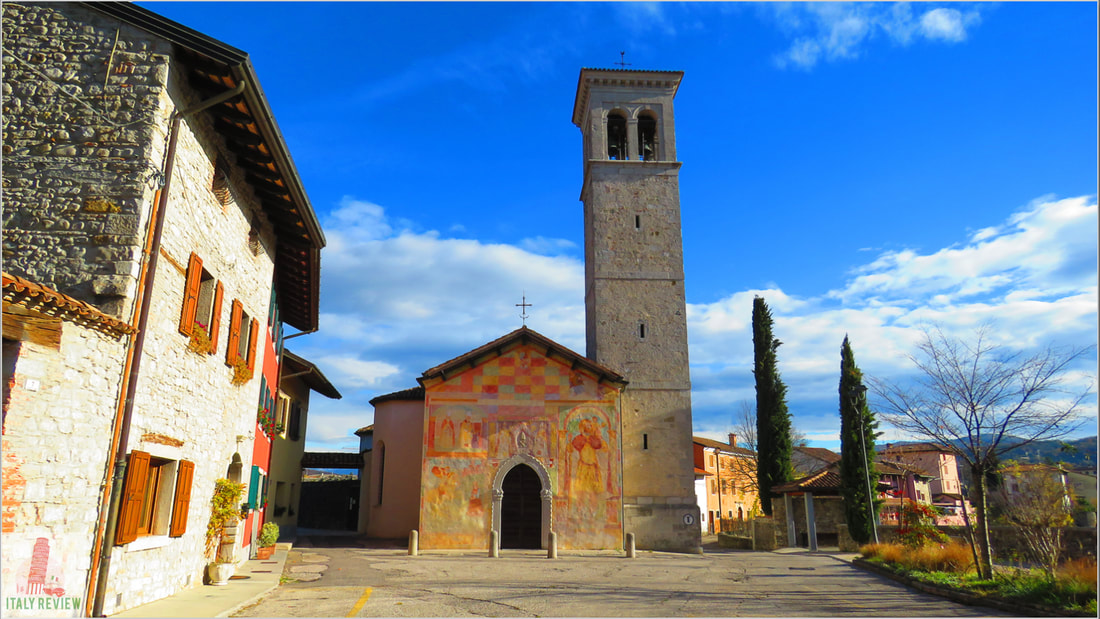
Further UNESCO sites within the region include Palmanova for its Venetian Defensive Walls, and the town of Cividale del Friuli, a former base of the Longobards that ruled Italy during the early medieval period.
Udine
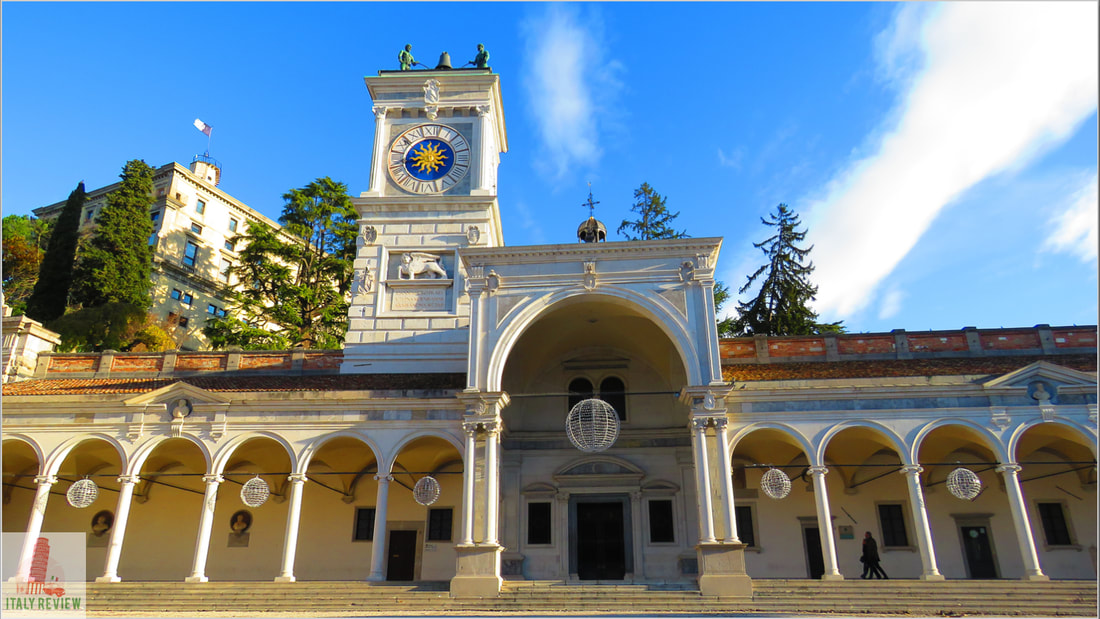
Combining historical importance and aesthetic beauty, the city of Udine is a must for any serious exploration of the region. It was the powerful Venetian Republic that left the biggest stamp on Udine, building beautiful churches and palaces, including the Loggia del Lionello, modelled on the Doge's Palace in Venice itself.
Gorizia
South-east of Udine, the final major city within Friuli Venezia Giulia is Gorizia. Lying as it does, right on the border with Slovenia, it represents an obvious mix of cultures, with even its name belonging more to Slavic than Italian traditions. Keep an eye out here for the Chiesa di Sant'Ignazio whose domes are of a distinctly more eastern appearance than is typically found in Italy.
Ski resorts
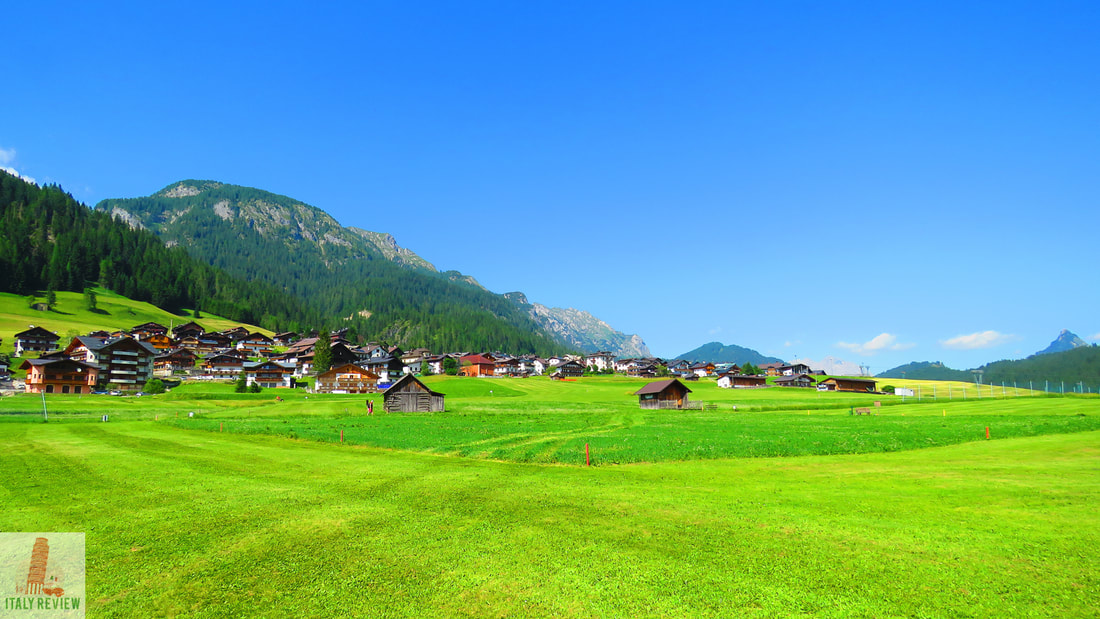
Apart from the third of the region made up by the Carso limestone plateau, the remainder of Friuli-Venezia Giulia consists of alluvial plains that eventually drift into the Adriatic to the south, and the majestic Alps to the north, accounting for roughly half of the terrain. The snow-capped mountains of the northern climes are a favourite winter sport destination including the ski resorts of Tarvisio and Sella Nevea.
The Lakes of Fusine
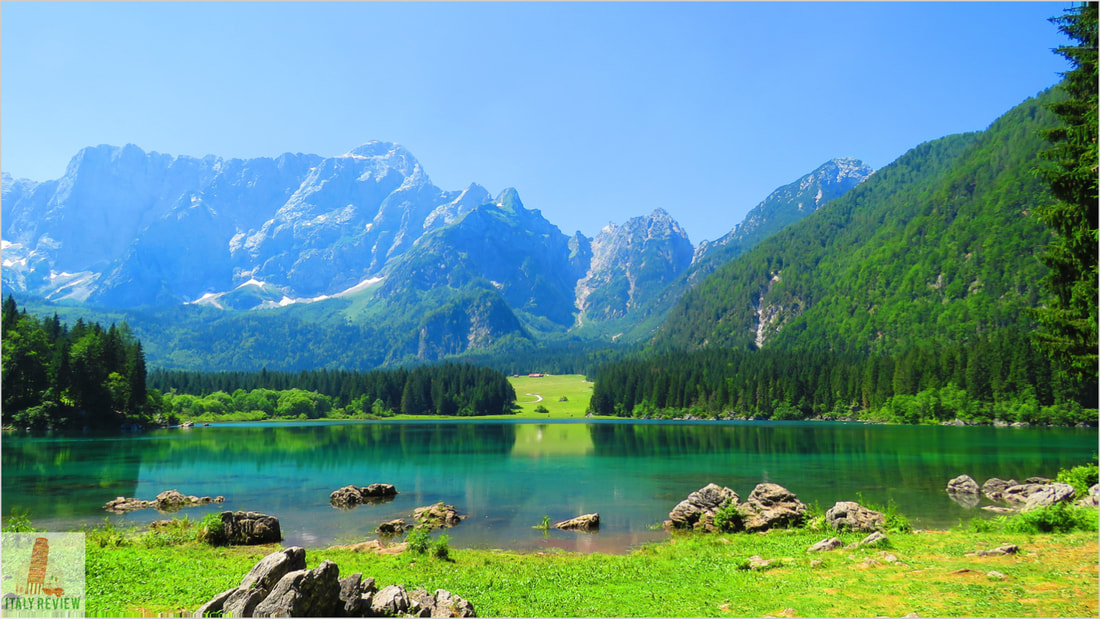
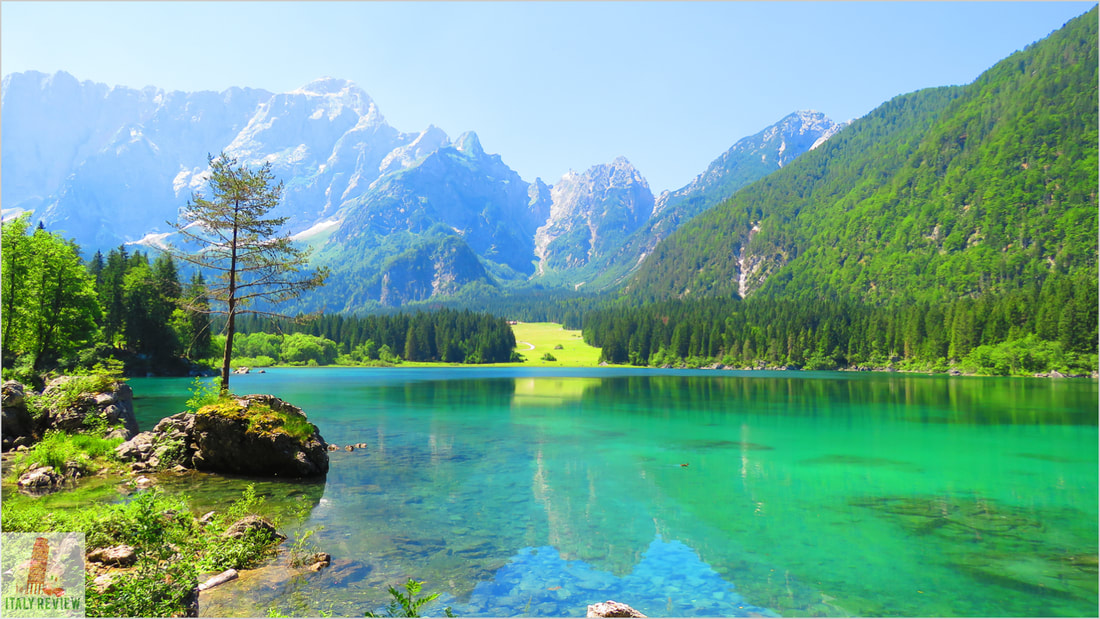
Offering some of the most breathtaking scenery in the region however, are the lakes. In the absolute north-eastern corner of Italy's border with Slovenia are the two "Laghi di Fusine", or Fusine Lakes. The upper "Lago di Fusine Superiore" and lower, "Lago di Fusine Inferiore" are situated within a short walk of each other and offer a number of opportunities for activity and leisure.
Lakeside resorts and historic towns
Despite being one of Italy's smallest regions, Friuli Venezia Giulia's environs are packed with historical sights and fabulous scenery. The lakes of Barcis and Sauris are two such locations in the north of the region and just a short distance from the rolling fields and open-spaces of Sappada.
Of more historical importance, a number of towns should be included in your itineraries including Spilimbergo, Sacile, San Daniele del Friuli and San Vito al Tagliamento to name just a few.
Moving around in Friuli-Venezia Giulia
International travellers can take advantage of the region's Trieste Airport, with further options available at nearby Treviso or slightly further afield: Venice. In the flatter, southern reaches of the region, public transport in the form of buses and trains is efficient and reliable, while the Alpine areas are best explored by car if possible.
Things to Do
Things to Do in Friuli-Venezia Giulia
- Trieste and Piazza Unità d’Italia reflect the region’s Habsburg legacy, with the largest seafront square in Europe facing the Adriatic. The city includes the Miramare Castle, Roman ruins, and literary cafés, while the hilltop Cathedral of San Giusto offers views over the port and coastline.
- Udine and the Castle Hill form the artistic centre of central Friuli, with piazzas, arcades, and Venetian-style architecture. The castle houses the Civic Museums and overlooks the city’s rooftops, while the town is known for Tiepolo frescoes in the Archbishop’s Palace and local Friulian cuisine.
- Cividale del Friuli and the Lombard Temple preserve early medieval heritage on the banks of the Natisone River. The town was a Lombard capital, with highlights including the Tempietto Longobardo, a medieval bridge, and archaeological museums showcasing Lombard and Roman finds.
- Aquileia and the Basilica Mosaics mark one of Italy’s most important Roman archaeological sites. The basilica features an extensive 4th-century mosaic floor, and nearby ruins include a Roman forum, river port, and ancient roadways, offering a glimpse into one of the Roman Empire’s key cities.
- Gorizia and the Border Castle stand near the Slovenian frontier, with a hilltop castle offering views over both countries. The town includes Austro-Hungarian architecture, WWI museums, and links to the twin town of Nova Gorica, forming a unique cross-border urban area.
- Grado and the Historic Centre lie on a lagoon island connected by a causeway to the mainland. Known for its beaches and thermal baths, the old town includes early Christian basilicas such as Sant’Eufemia, with mosaics and a historic baptistery near the fishing harbour.
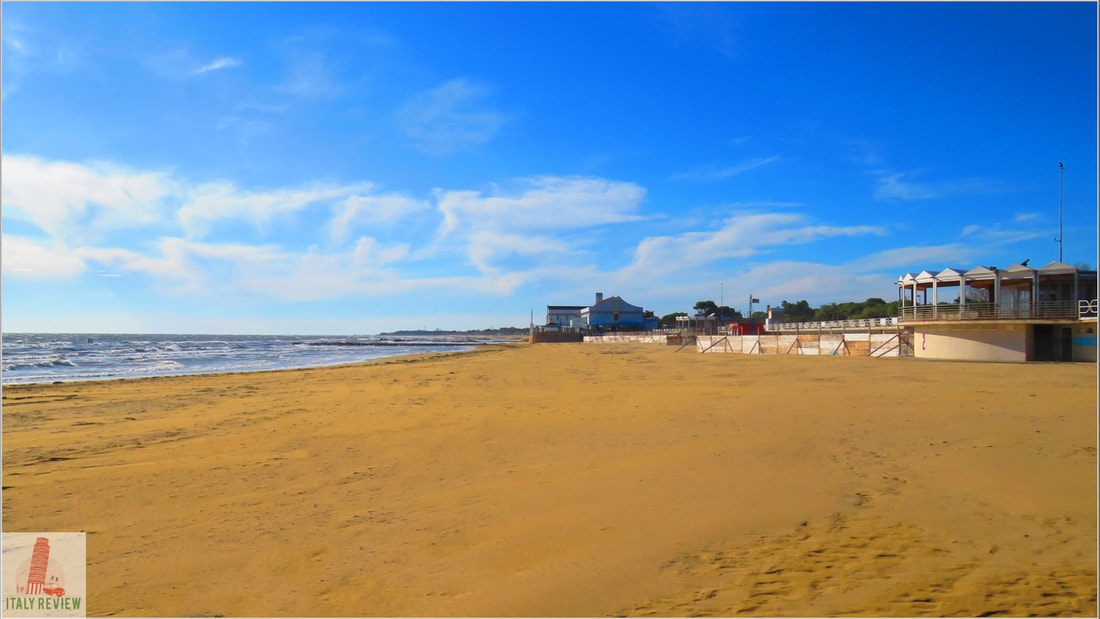
- Lignano Sabbiadoro and the Adriatic Beaches are a major seaside resort with long sandy shores, cycling paths, and family-friendly attractions. The town includes marinas, pedestrian streets, and nearby nature reserves such as the Marano Lagoon and the Stella River estuary.
- Tarvisio and the Triple Border provide alpine scenery and access to Austria and Slovenia. The town sits in the Julian Alps, with ski slopes, summer hiking trails, and the nearby Fusine Lakes—glacial lakes surrounded by forest and mountains near the border crossing points.
- Palmanova and the Star-Shaped Plan represent one of Europe’s best-preserved examples of Renaissance military architecture. The nine-pointed fortress town is enclosed by walls and moats, with a central hexagonal piazza and symmetrical street layout designed for defence and control.
- Sella Nevea and the Julian Alps Trails are located in a high mountain pass area known for ski resorts and summer hikes. The area includes access to Mount Canin, caves, alpine refuges, and cross-border paths into Slovenia’s Triglav National Park.
Tours and Activities
Friuli-Venezia Giulia Tours and Activities
What to Eat
What to Eat in Friuli-Venezia Giulia
- Frico – A crisp or soft pancake made from grated Montasio cheese, sometimes mixed with potatoes or onions and pan-fried. Originating in Carnia, it was once a way to use cheese rinds and is now a regional speciality served as an appetiser or main dish.
- Cjarsons – Sweet-savoury filled pasta parcels from the Carnic Alps, with fillings such as potatoes, cocoa, cinnamon, raisins, and herbs. Dressed with melted butter and smoked ricotta, they reflect a unique mix of flavours and centuries of local mountain tradition.
- Jota – A thick, sour soup made with sauerkraut, beans, potatoes, and often pork, especially common in Trieste and the surrounding area. Of Central European origin, it is eaten hot in winter and showcases the Austro-Slavic influence on regional peasant food.
- Brovada e muset – Pickled turnips grated and cooked slowly, served with muset, a rich, soft pork sausage. A typical winter dish from rural Friuli, it is traditionally prepared during pig slaughter season and eaten during the colder months.
- Blecs – Hand-cut pasta squares made from buckwheat flour, often served with butter, herbs, or cheese, especially in northern areas. Their dark colour and nutty taste reflect the alpine environment and historic reliance on buckwheat in mountain diets.
- Gubana – A spiral-shaped sweet bread filled with dried fruit, nuts, honey, cocoa, and grappa, typically served at Christmas or Easter. Originally from the Natisone valleys, it symbolises celebration and is sliced and shared among family and guests.
- Polenta e renga – Soft or firm polenta served with salted and grilled herring, often prepared on Ash Wednesday and in coastal areas. The dish reflects both religious traditions and the historic role of preserved fish in inland Friulian diets.
- Baccalà mantecato – Creamed salt cod whipped with olive oil and garlic until smooth, served with toasted bread or polenta. Though Venetian in origin, it is commonly eaten in the coastal areas of Friuli, particularly around Grado and Monfalcone.
- Salame friulano – A mildly spiced pork salami made using traditional ageing methods, often sliced thick and eaten with bread or cheese. Many households produce their own versions in winter, and it features prominently in antipasti across the region.
- Strucolo di pomi – A rolled apple strudel similar to the Austrian version, filled with spiced apples, raisins, pine nuts, and breadcrumbs. It may be baked or boiled, and is found across Friuli and Trieste, served warm with cream or on its own.
Photo Gallery
Friuli-Venezia Giulia Photo Gallery
Friuli-Venezia Giulia Top 10 - My Recommended Destinations
1. Trieste
2. Lakes of Fusine
3. Udine
4. Grado
5. Cividale del Friuli
6. Spilimbergo
7. Palmanova
8. Aquileia
9. Sacile
10. Muggia
👉 Explore the Top 10 Places to Visit in Friuli-Venezia Giulia
1. Trieste
2. Lakes of Fusine
3. Udine
4. Grado
5. Cividale del Friuli
6. Spilimbergo
7. Palmanova
8. Aquileia
9. Sacile
10. Muggia
👉 Explore the Top 10 Places to Visit in Friuli-Venezia Giulia
How to Get to [Place Name]
How to Get to Friuli-Venezia Giulia
By Rail: Friuli-Venezia Giulia is served by Trenitalia regional and long-distance trains, with main stations in Trieste, Udine, Gorizia, and Pordenone. High-speed and Intercity trains connect the region with Venice, Milan, and Rome, while regional services extend to the Slovenian border. Journey times are approximately 2 hours from Venice to Trieste, 1 hour to Udine, and 4 hours from Milan to Trieste.
By Road: The region is accessible via the A4 (Turin–Trieste) and A23 (Palmanova–Tarvisio) motorways. The drive from Venice to Trieste takes about 1 hour and 30 minutes, from Ljubljana around 1 hour and 20 minutes, and from Milan approximately 4 hours. Roads are well maintained, and cross-border travel to Slovenia and Austria is straightforward. Public parking is available in all major cities and tourist areas, including coastal resorts and alpine towns.
Nearest International Airports:
By Road: The region is accessible via the A4 (Turin–Trieste) and A23 (Palmanova–Tarvisio) motorways. The drive from Venice to Trieste takes about 1 hour and 30 minutes, from Ljubljana around 1 hour and 20 minutes, and from Milan approximately 4 hours. Roads are well maintained, and cross-border travel to Slovenia and Austria is straightforward. Public parking is available in all major cities and tourist areas, including coastal resorts and alpine towns.
Nearest International Airports:
- Trieste Airport (Aeroporto di Trieste – Ronchi dei Legionari): Located approximately 30 kilometres north-west of Trieste, the drive takes about 30 minutes. It offers domestic and selected European flights.
- Venice Marco Polo Airport (Aeroporto di Venezia Marco Polo): Around 140 kilometres west of Trieste, reachable in about 1 hour and 40 minutes. It provides a wide range of international connections.
- Ljubljana Airport (Letališče Jože Pučnik Ljubljana): Situated about 130 kilometres east of Udine, the journey takes around 1 hour and 30 minutes by car, offering access to central and eastern Europe.
Private Transfers
Friuli-Venezia Giulia Private Transfers
A private transfer provides a comfortable and reliable way to travel within Friuli-Venezia Giulia, with a professional local driver offering direct, door-to-door service. It’s a useful option for visitors exploring the region’s coastal areas, wine country, and mountain towns without needing to rely on train connections, bus timetables, or car hire.
Transfers can be arranged from Trieste Airport and Venice Marco Polo Airport, both serving regular domestic and international flights. Private transfers also connect destinations across the region such as Trieste, Udine, Gorizia, Lignano Sabbiadoro, and Tarvisio, allowing you to travel smoothly and at your own pace whether you are heading to the coast, the cities, or the Alpine areas.
To request a quote or check availability for a private transfer, just fill out the short form below and we’ll get back to you with all the details.
Transfers can be arranged from Trieste Airport and Venice Marco Polo Airport, both serving regular domestic and international flights. Private transfers also connect destinations across the region such as Trieste, Udine, Gorizia, Lignano Sabbiadoro, and Tarvisio, allowing you to travel smoothly and at your own pace whether you are heading to the coast, the cities, or the Alpine areas.
To request a quote or check availability for a private transfer, just fill out the short form below and we’ll get back to you with all the details.
Friuli-Venezia Giulia by Category
Friuli Venezia Giulia's Borghi Piu Belli d'Italia
Lakes of Friuli Venezia Giulia
Major Cities and Towns of Friuli Venezia Giulia
Orange Flag Towns of Friuli Venezia Giulia
Scenic Towns of Friuli Venezia Giulia
Seaside Locations of Friuli Venezia Giulia
Ski Resorts of Friuli Venezia Giulia
Things to see in Friuli Venezia Giulia
Top 10 Places to Visit in Friuli-Venezia Giulia
UNESCO World Heritage Sites of Friuli Venezia Giulia
Lakes of Friuli Venezia Giulia
Major Cities and Towns of Friuli Venezia Giulia
Orange Flag Towns of Friuli Venezia Giulia
Scenic Towns of Friuli Venezia Giulia
Seaside Locations of Friuli Venezia Giulia
Ski Resorts of Friuli Venezia Giulia
Things to see in Friuli Venezia Giulia
Top 10 Places to Visit in Friuli-Venezia Giulia
UNESCO World Heritage Sites of Friuli Venezia Giulia
Friuli-Venezia Giulia Destinations A-Z
Aquileia
Barcis
Barcola
Camporosso
Cividale del Friuli
Clauiano
Codroipo
Cordovado
Cormons
Duino
Erto e Casso
Fagagna
Forni Avoltri
Gemona del Friuli
Gorizia
Gradisca d'Isonzo
Grado
Grignano
Lago di Fusine Inferiore
Lago di Fusine Superiore
Lake Barcis
Lake Sauris
Latisana
Lignano Sabbiadoro
Malborghetto Valbruna
Maniago
Marano Lagunare
Monfalcone
Muggia
Parco Naturale delle Prealpi Giulie
Poffabro
Polcenigo
Pontebba
Pordenone
Resia
Rigolato
Sacile
San Daniele del Friuli
San Vito al Tagliamento
Sappada
Sauris
Sesto al Reghena
Sistiana
Spilimbergo
Tarvisio
Tolmezzo
Toppo
Tricesimo
Trieste
UTI Medio Friuli
UTI del Friuli Centrale
Udine
Valvasone
Venzone
Barcis
Barcola
Camporosso
Cividale del Friuli
Clauiano
Codroipo
Cordovado
Cormons
Duino
Erto e Casso
Fagagna
Forni Avoltri
Gemona del Friuli
Gorizia
Gradisca d'Isonzo
Grado
Grignano
Lago di Fusine Inferiore
Lago di Fusine Superiore
Lake Barcis
Lake Sauris
Latisana
Lignano Sabbiadoro
Malborghetto Valbruna
Maniago
Marano Lagunare
Monfalcone
Muggia
Parco Naturale delle Prealpi Giulie
Poffabro
Polcenigo
Pontebba
Pordenone
Resia
Rigolato
Sacile
San Daniele del Friuli
San Vito al Tagliamento
Sappada
Sauris
Sesto al Reghena
Sistiana
Spilimbergo
Tarvisio
Tolmezzo
Toppo
Tricesimo
Trieste
UTI Medio Friuli
UTI del Friuli Centrale
Udine
Valvasone
Venzone