Narni
|
Latest page update: 20 May 2025
|
By: Dion Protani
|
Where to Stay
Where to Stay in Narni
Narni has a good range of established hotels, many located within or just outside its medieval centre. Accommodation in the town is generally praised for its character, comfort and strong guest feedback for service and location.
Hotel Terra Umbra is a leading choice set in the countryside just beyond Narni, featuring a large pool, gardens and excellent reviews for comfort and facilities (€€€). La Loggia dei Priori offers central accommodation within the historic town, with elegant rooms, a restaurant and consistently positive feedback for charm and convenience (€€). A short drive away, Hotel Fina provides modern rooms, on-site dining and good reviews for its friendly service and easy access to the town (€€).
Where is
Where is Narni?
|
The hill town of Narni is situated within the Province of Terni, a distance of 87 kilometres south of Perugia, the regional capital of Umbria. Standing at an elevation of 240 metres above sea level it has a population of around 19,000 residents.
Nearby places of interest include the towns of Amelia, Terni, San Gemini, the Marmore Falls and Piediluco. |
Comune di Narni
|
Province: Terni
Region: Umbria Population: 17,904 (in 2024 - source) Size: 197 km² Elevation: 240 metres Close by: Amelia, Terni, San Gemini, Marmore Waterfalls, Piediluco Recommended accommodation: Vallantica Resort & SPA (13 km) |
What People Ask About Narni, Umbria
Is Narni worth visiting?
Yes, Narni is worth visiting for its medieval architecture, fortified walls, and winding streets. It is also known for Narni Sotterranea, an underground route with historic tunnels and chambers.
How do I get to Narni?
Narni is about 90 kilometres north of Rome and can be reached by car along the E45 or A1 motorway. The town has its own station, Narni-Amelia, on the Rome–Ancona line, with bus connections up to the hilltop centre.
What are the main attractions in Narni?
Attractions include Narni Sotterranea, the Cathedral of San Giovenale, and Rocca Albornoz, a fortress with views of the Nera valley. The town’s historic streets and squares add to the experience of exploring on foot.
Why is Narni connected to Narnia?
Narni is believed to have inspired the name “Narnia” in the works of C.S. Lewis. The town’s Latin name was Narnia, derived from the nearby Nera river, and Lewis is thought to have taken inspiration from it.
What food is typical of Narni?
Umbrian specialities such as porchetta, hand-rolled strangozzi pasta, and lentil dishes are typical. Local olive oil, cured meats, and wines from the nearby hills are also part of the town’s traditional cuisine.
Related links
Discover
Discover Narni
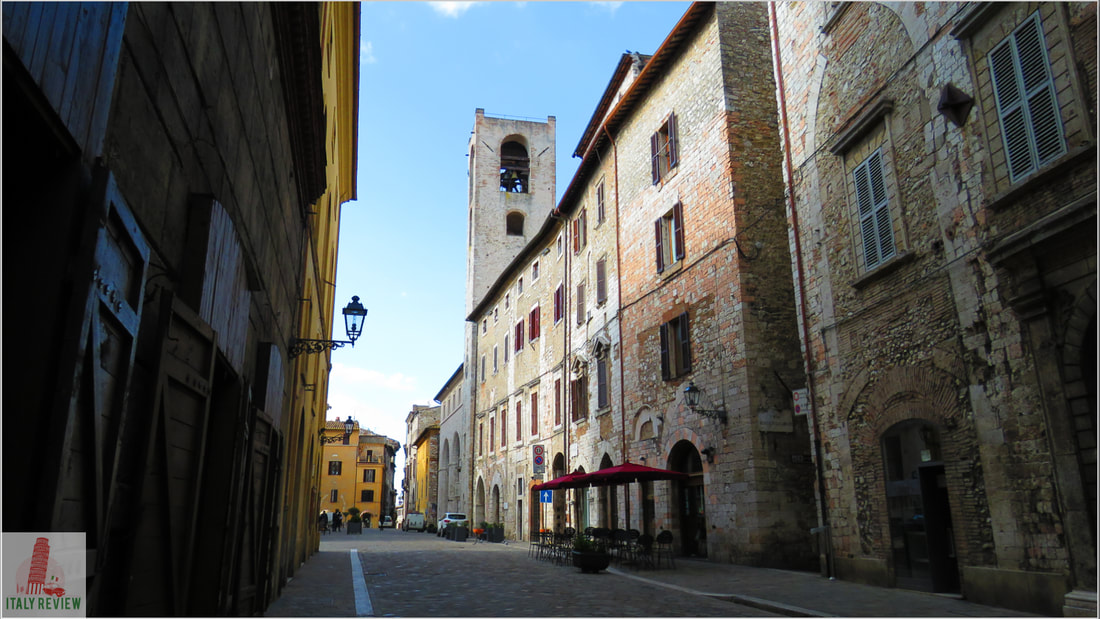
Occupying a dramatic position above the Nera Valley, Narni is one of Umbria’s oldest and most atmospheric hill towns. Its stone-built centre rises from a rocky outcrop, enclosed by medieval walls that once guarded this strategic point between Terni and Amelia. The historic heart is a network of steep alleys, stairways, and piazzas framed by palaces and churches, while views from the town extend over wooded hills and the course of the Nera River far below.
Among its most significant landmarks are the Cathedral of San Giovenale, dating to the 12th century, and the Rocca Albornoziana, a fortress that once controlled the Via Flaminia. Beneath the streets, Narni Sotterranea reveals an underground world of chapels and chambers dating from early Christian times. The town’s location near the border with Lazio and its good transport connections make it a convenient stop for visitors travelling between Rome, Terni, and the Umbrian interior.
One of Narni's most notable historical events is the story of the Narnian Knight, who was a character mentioned in medieval literature, inspiring the famous tale of "The Chronicles of Narnia" by C.S. Lewis.
Among its most significant landmarks are the Cathedral of San Giovenale, dating to the 12th century, and the Rocca Albornoziana, a fortress that once controlled the Via Flaminia. Beneath the streets, Narni Sotterranea reveals an underground world of chapels and chambers dating from early Christian times. The town’s location near the border with Lazio and its good transport connections make it a convenient stop for visitors travelling between Rome, Terni, and the Umbrian interior.
One of Narni's most notable historical events is the story of the Narnian Knight, who was a character mentioned in medieval literature, inspiring the famous tale of "The Chronicles of Narnia" by C.S. Lewis.
Things to Do
Things to Do in Narni
- Centro Storico di Narni clings dramatically to the rocky slopes above the Nera River gorge, its streets winding among stone houses, medieval arches, and Roman remnants. The town exudes a sense of mystery and history, with noble palaces, hidden courtyards, and towering fortifications overlooking narrow alleys. Small piazzas reveal breathtaking views over green valleys and distant ridgelines. Walking through Narni offers a journey into a place where ancient legacies and medieval grandeur intertwine.
- Cattedrale di San Giovenale stands near the heart of the town, its Romanesque façade simple yet dignified, reflecting centuries of religious devotion. Inside, visitors discover frescoed chapels, marble altars, and sacred artworks chronicling Narni’s spiritual heritage. The cathedral has long been the focal point for religious life and civic ceremonies. It remains one of Narni’s most significant symbols of faith and historical identity.
- Rocca Albornoziana dominates the hilltop above Narni, an imposing fortress built in the 14th century to secure papal power in the region. Massive walls, corner towers, and sweeping ramparts offer panoramic views over the Umbrian countryside. Exploring the fortress reveals stories of battles, noble intrigues, and shifting political alliances. It stands as Narni’s most powerful monument to its medieval strength and strategic importance.
- Piazza dei Priori serves as the vibrant heart of Narni, surrounded by medieval palaces, elegant loggias, and bustling cafés. The square hosts markets, festivals, and the renowned Corsa all’Anello, a historic re-enactment that fills the town with pageantry each spring. Cobblestones underfoot and views of noble façades lend an air of timeless elegance. It’s the perfect place to pause and savour the lively yet historic spirit of Narni.
- Guided historical and underground tours in Narni take visitors through Roman bridges, medieval streets, and secret tunnels hidden beneath the town. Local guides share stories of ancient engineering feats, Inquisition trials, and Narni’s claim as Italy’s geographic centre. Tours often include tastings of Umbrian specialities such as truffle dishes, cured meats, and local wines. Exploring with a guide reveals Narni’s unique blend of deep history, architectural beauty, and mysterious underground wonders.
Tours and Activities
Narni Tours and Activities
Photo Gallery
Narni Photo Gallery
Umbria Top 10 - My Recommended Destinations in Umbria
1. Assisi
2. Spoleto
3. Gubbio
4. Perugia
5. Orvieto
6. Lake Trasimeno
7. Castelluccio
8. Marmore Waterfalls
9. Trevi
10. Todi
👉 Explore the Top 10 Places to Visit in Umbria
1. Assisi
2. Spoleto
3. Gubbio
4. Perugia
5. Orvieto
6. Lake Trasimeno
7. Castelluccio
8. Marmore Waterfalls
9. Trevi
10. Todi
👉 Explore the Top 10 Places to Visit in Umbria
How to Get to [Place Name]
How to Get to Narni
By Rail: Narni has its own train station, Narni-Amelia, located about 5 kilometres from the town centre. The station lies on the Rome–Ancona line operated by Trenitalia, with regional and intercity services connecting to Terni in around 10 minutes, Spoleto in roughly 30 minutes, and Rome in about 1 hour and 10 minutes. Local buses and taxis link the station with Narni’s historic centre.
By Road: Narni is located in southern Umbria, within the province of Terni. From Terni, the drive is approximately 15 kilometres and takes around 20 minutes via the SS3. From Perugia, it is about 95 kilometres and takes roughly 1 hour and 20 minutes by car via the E45. Parking areas are available outside the old town, with escalators and lifts providing easy access to the upper centre.
Nearest International Airports:
By Road: Narni is located in southern Umbria, within the province of Terni. From Terni, the drive is approximately 15 kilometres and takes around 20 minutes via the SS3. From Perugia, it is about 95 kilometres and takes roughly 1 hour and 20 minutes by car via the E45. Parking areas are available outside the old town, with escalators and lifts providing easy access to the upper centre.
Nearest International Airports:
- Perugia San Francesco d’Assisi Airport: About 95 kilometres from Narni, with a driving time of around 1 hour and 30 minutes via the E45. It is the closest airport, offering domestic and short-haul European flights.
- Rome Ciampino Airport: Located roughly 105 kilometres south, taking around 1 hour and 40 minutes by car via the A1 motorway. Convenient for international arrivals.
- Rome Fiumicino Airport: Approximately 125 kilometres southwest, with a journey time of about 1 hour and 50 minutes via the A1 motorway. The best option for long-haul and European connections.
Private Transfers
Narni Private Transfers
A private transfer provides an easy and comfortable way to reach Narni or continue your journey from the town to other destinations across Umbria and central Italy. You’ll be collected directly from your chosen location and driven by a professional local driver, ensuring a smooth and efficient journey without the need for public transport or car hire.
Private transfers can be arranged to and from Perugia San Francesco d’Assisi Airport, as well as Rome Fiumicino Airport and Rome Ciampino Airport, all offering convenient access for arrivals and departures. The drive from Perugia Airport to Narni takes around 1 hour 30 minutes, while travel from Rome’s airports generally takes between 1 hour 15 minutes and 1 hour 45 minutes depending on traffic. Transfers can also be organised to Terni, Amelia, Spoleto, and Orvieto, or to other destinations throughout southern Umbria.
To request a quote or check availability for a private transfer, just fill out the short form below and we’ll get back to you with all the details.
Private transfers can be arranged to and from Perugia San Francesco d’Assisi Airport, as well as Rome Fiumicino Airport and Rome Ciampino Airport, all offering convenient access for arrivals and departures. The drive from Perugia Airport to Narni takes around 1 hour 30 minutes, while travel from Rome’s airports generally takes between 1 hour 15 minutes and 1 hour 45 minutes depending on traffic. Transfers can also be organised to Terni, Amelia, Spoleto, and Orvieto, or to other destinations throughout southern Umbria.
To request a quote or check availability for a private transfer, just fill out the short form below and we’ll get back to you with all the details.